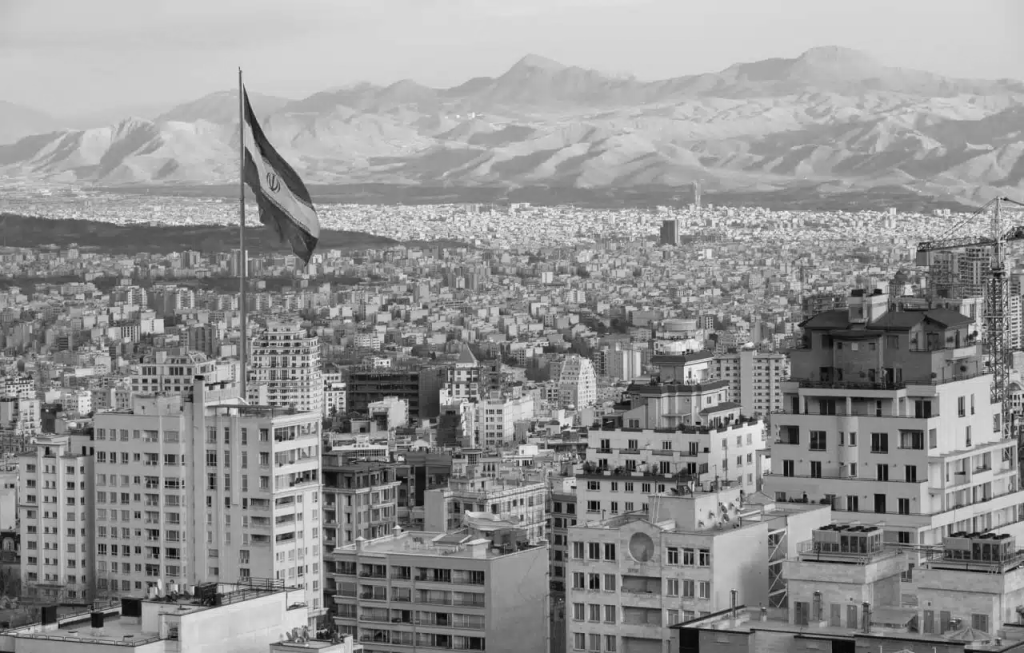
In June 2025 and February 2026, U.S. forces carried out two major sets of strikes inside Iran: Operation Midnight Hammer and the opening wave of Operation Epic Fury. Both triggered fierce arguments about self-defense and aggression. But once direct interstate hostilities were underway, the harder legal question became less about whether force could be used, and more about how it was used. That is where international humanitarian law begins to do the real work.
Main legal takeaway
Midnight Hammer and Epic Fury should not be treated as the same kind of IHL case. Midnight Hammer is the more straightforward legal problem, centered on whether safeguarded nuclear facilities could lawfully be treated as military objectives and whether enough care was taken with radiological and civilian risk. Epic Fury is broader and less settled, because its legality depends on case-by-case assessment of multiple targets, urban effects, precautions, and alleged civilian harm on a still-evolving public record.
How this article approaches the law
Two legal frameworks are easy to blur together.
The first asks whether a state was legally entitled to use force at all. That is the law of self-defense, sovereignty, imminence, and aggression, also known as jus ad bellum. Article 51 of the U.N. Charter is the cornerstone of that debate. It recognizes a state’s inherent right of individual or collective self-defense if an armed attack occurs, allowing states to use force until the U.N. Security Council takes measures to maintain international peace and security.
The second asks how force must be used once hostilities exist. That is jus in bello, or international humanitarian law. This is the body of law that governs targeting, civilian protection, proportionality, and precautions in attack.
One treaty clarification is necessary. This article does not treat Additional Protocol I as binding treaty law on the United States, Israel, or Iran, since none of those states has ratified the protocol. Instead, it treats the 1949 Geneva Conventions as the treaty foundation where they genuinely apply, and it relies heavily on customary IHL for the core targeting rules. Those customary rules include the rule of distinction between civilians and combatants, the rule of distinction between civilian objects and military objectives, the definition of military objectives, the rule that civilian objects lose protection if they are used for military purposes, the prohibition on disproportionate attacks, and the obligation to take feasible precautions in attack
That does not mean the rest of the Geneva Conventions are irrelevant. It means they have to be used carefully and only where the facts really fit them.
Convention map used in this brief
Clearly engaged: Common Article 2, once direct interstate force is being used.
Potentially implicated depending on facts: GC IV Articles 16 and 27 for civilians exposed to grave danger or violence; GC IV Articles 18 and 19, and GC I Articles 12, 19, and 24 if hospitals, medical units, or medical personnel were affected.
Potentially escalated provisions if later facts harden: GC IV Article 147 and GC I Article 50 on grave breaches.
Reader key
Common Article 1 requires states to respect the Geneva Conventions and to ensure respect for them in all circumstances.
Common Article 2 is the treaty trigger for international armed conflict. It brings the Geneva Conventions into play when armed conflict arises between states.
GC IV Article 16 protects the wounded and sick, the infirm, and civilians exposed to grave danger.
GC IV Article 27 is a core civilian-protection rule. It requires protected civilians to be treated humanely and safeguarded against violence or threats of violence.
GC IV Articles 18 and 19 protect civilian hospitals. Hospitals may not be attacked, and their protection only ceases in very limited circumstances.
GC I Articles 12, 19, and 24 protect the wounded and sick in armed forces, military medical units, and medical personnel.
GC IV Article 147 and GC I Article 50 are grave-breach provisions. They become important if later facts support very serious violations such as willful killing, serious injury, or unlawful destruction.
Operation Midnight Hammer
22 June 2025
Operation Midnight Hammer was the U.S. strike on Fordow, Natanz, and Isfahan, three major Iranian nuclear sites. Fordow and Natanz were enrichment sites. Isfahan was a large nuclear-related complex. The IAEA, the International Atomic Energy Agency, is the international body responsible for nuclear safeguards and verification. It confirmed that the sites had been hit and reported no off-site radiological release at the time, while still emphasizing that attacks on nuclear facilities sharply degrade nuclear safety and security.
At the level of the jus ad bellum, the dispute is clear. In its 27 June 2025 letter to the Security Council, the United States invoked Article 51 of the U.N. Charter and described the strike as collective self-defense. It framed the operation as necessary and proportionate and directed solely against Iran’s nuclear program. Iran’s response rejected that legal theory outright and treated the strike as unlawful force against safeguarded facilities.
Still, once direct U.S. force was used against Iranian territory, that is only the first legal layer. The second layer is IHL. Here, the central question is whether the three sites could lawfully be treated as military objectives. If they could, the next question is whether the strike complied with the rules on distinction, proportionality, and precautions in attack, especially given the obvious possibility of radiological or toxic consequences.
Strongest U.S. position
The strike was precise, limited, and directed at infrastructure the United States considered part of a military threat.
Strongest opposing position
These were safeguarded facilities publicly framed as peaceful, so the burden of proving they were lawful military targets is unusually high.
Likely Geneva implications
Common Articles 1 and 2 are clearly engaged. GC IV Articles 16 and 27 may also become relevant if civilians were foreseeably exposed to grave danger or violence through the planning or execution of the strike. On the current public record, the medical-protection provisions remain legally important in theory, but they do not yet appear central on the facts presently known.
The most credible conclusion is not that a Geneva Convention violation has already been proved. It is that Common Articles 1 and 2 are clearly engaged, and Geneva Convention IV Articles 16 and 27 may be implicated depending on how civilian exposure and risk were assessed in planning and execution. The central legal concern here is not simply whether the strike was accurate. It is whether these safeguarded nuclear facilities could lawfully be treated as military objectives at all, and whether the United States took sufficient precautions against wider civilian consequences, including radiological or toxic harm, even if the strike itself was technically precise.
Opening Wave of Operation Epic Fury
28 February 2026
Epic Fury is harder. The law is not necessarily weaker here, but the public record is thinner and less settled.
In its public description of the operation, the United States framed the opening wave as a defensive effort to neutralize serious threats from Iran’s security apparatus. The War Powers report referred to ballistic missile sites, maritime mining capabilities, air defenses, and command-and-control capabilities. CENTCOM described the strikes as aimed at dismantling parts of the Iranian security apparatus that posed an imminent threat. Iran’s response, by contrast, framed the same operation as aggression, a violation of sovereignty and territorial integrity, and a breach of the U.N. Charter’s prohibition on the use of force.
That is only the first layer. The second layer is where Epic Fury becomes more difficult than Midnight Hammer. Midnight Hammer was a strike on three named sites. Epic Fury appears to have been a much broader operation across military and leadership-related targets, apparently in and around populated areas. The legal issue is no longer mostly whether a small number of facilities could be treated as military objectives. It becomes a more operational set of questions: what exactly was hit, what was nearby, what intelligence supported the target selection, what precautions were feasible, and what civilian harm was reasonably foreseeable.
What supports the strike legally
The announced target sets and asserted defensive rationale may support a military-objective theory for many strikes.
What creates legal pressure
Contested allegations of civilian-location strikes in or near populated areas raise serious questions about distinction, feasible precautions, and proportionality.
Likely Geneva implications
Common Articles 1 and 2 again provide the treaty foundation. If civilians were affected in urban areas, GC IV Article 27 becomes a real part of the analysis. If civilians were wounded or left in grave danger, GC IV Article 16 may also be implicated. If later reporting about schools, hospitals, or medical sites is verified, GC IV Articles 18 and 19, together with GC I Articles 19 and 24, would move much closer to the center of the legal assessment. If later investigations establish willful killing, serious injury, or extensive destruction not justified by military necessity, GC IV Article 147, and potentially GC I Article 50, may become relevant.
So the right way to write Epic Fury is with disciplined hesitation. Precisely because the facts are still being fought over. On the current public record, the strongest conclusion is this: Epic Fury may have implicated Common Articles 1 and 2 and, depending on the development of the factual record, may also have implicated Geneva Convention IV Articles 16, 18, 19, 27, and potentially 147, along with Geneva Convention I Articles 12, 19, 24, and potentially 50 if medical protections or grave breaches come into clearer view. But that remains a potential-violation assessment, not a settled one.
Final assessment
These two incidents belong together because they test two very different kinds of legal difficulty.
Midnight Hammer is a narrow case. Its main question is whether safeguarded nuclear facilities could lawfully be treated as military objectives, and whether the United States handled the foreseeable civilian and radiological risks with enough care. The likely Convention implications are more focused.
Epic Fury is broader and less settled. It raises the same familiar targeting rules, but under far more difficult conditions: a larger target set, denser civilian surroundings, and more contested allegations of civilian-site harm. That is why the possible Convention implications are wider here, but also why the article has to be more careful about how firmly it speaks.
The approach this article takes does not pretend that every legal conclusion is already settled, but it also does not stop at Common Article 2. Instead, it identifies which Geneva Convention provisions may genuinely be engaged, explains what those provisions protect, and asks whether the available public record suggests potential breach through the way the strikes were planned, carried out, and later explained by the states involved.
Selected sources
Official documents
U.N. Security Council, Letter dated 27 June 2025 from the United States Mission to the United Nations addressed to the President of the Security Council (S/2025/426).
U.S. War Powers notification on the June 2025 strikes.
IAEA, Update on Developments in Iran (5), 22 June 2025.
U.S. War Powers notification on 28 February 2026 strikes.
U.N. Security Council, Iran letter on 28 February 2026 strikes (S/2026/106).
CENTCOM, U.S. Forces Launch Operation Epic Fury.
Reporting
Reuters, reporting on the June 2025 strikes and legal reactions.
Reuters, reporting on the early March 2026 civilian-harm allegations and investigations.
Associated Press, reporting on the alleged school-strike evidence in Iran.
Background and legal context
Just Security, The Day After U.S. Strikes on Iran’s Nuclear Program: A Policy and Legal Assessment.
Just Security, Assessing the U.S. Article 51 Letter for the Attack on Iran.
Lieber Institute, Israel (and the United States) vs. Iran: Self-Defence and Forcible Counterproliferation.
Geneva Conventions of 1949, especially Common Articles 1 and 2, GC IV Articles 16, 18, 19, 27, and 147, and GC I Articles 12, 19, 24, and 50.
