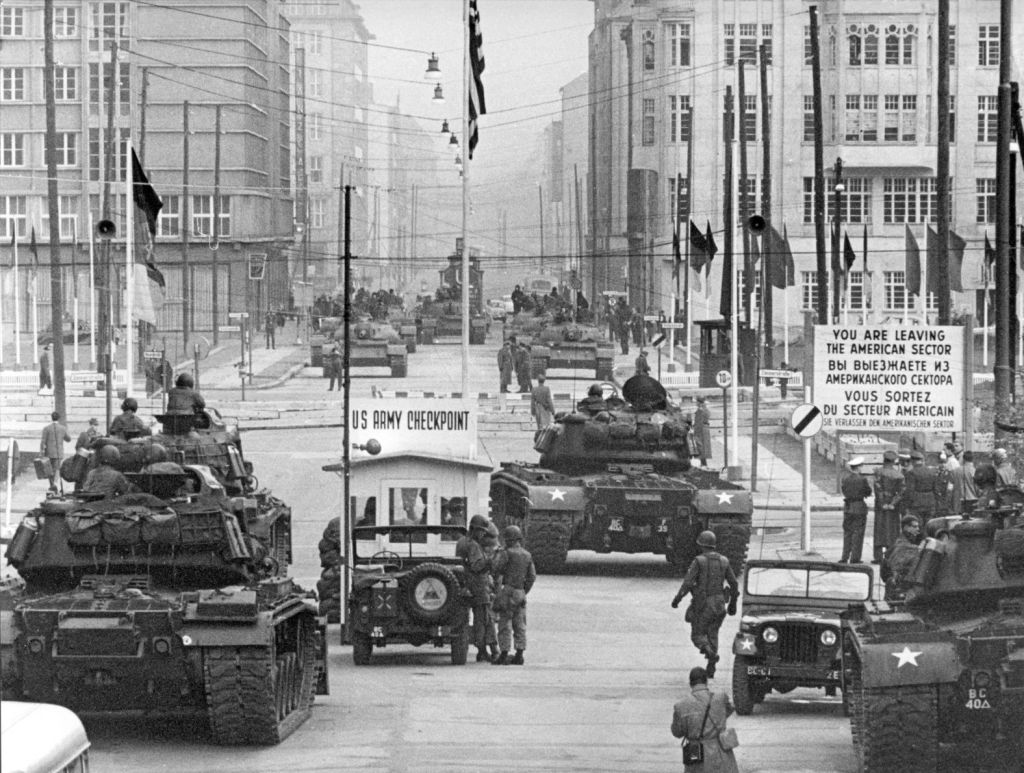
written by Artur Hodin / June 27 2025
When we hear the word “war,” many of us picture grand declarations, massive armies battles, or dramatic headlines. But in the world of international law, the term “war” itself is almost irrelevant. What truly matters is a factual, objective assessment: has a “threshold of violence” been crossed between belligerents?
Imagine a dial, ranging from isolated disturbances to full-scale armed confrontations. International Humanitarian Law (IHL), often called the “laws of war,” only “switches on” and begins to apply when the needle on that dial crosses a certain point. This threshold isn’t about formal declarations (even though frequently used until the WW2) or political recognition; it’s about the cold, hard facts on the ground: the intensity of the fighting and the organization of the groups involved.
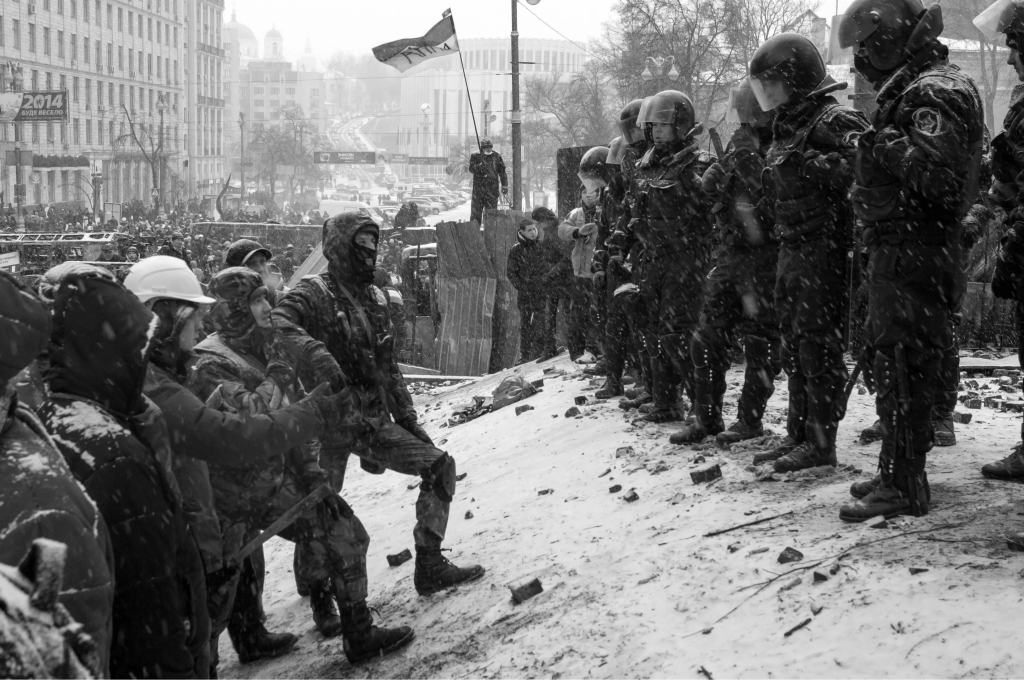
Protestors confront police in Kyiv, Ukraine, as anti-government protests turn violent. Lena Osokina/ Shutterstock
Why is this threshold so crucial? Because when it’s crossed, a profound legal transformation occurs with life-or-death consequences. Suddenly, acts that would be considered severe crimes in peacetime – acts that would lead to immediate arrest and prosecution – may become legally permissible. Indeed, in an armed conflict, it is legally permissible for combatants to kill enemy combatants, provided they adhere strictly to the rules of IHL. This is a unique and stark departure from any other legal framework, underscoring the immense shift that occurs at this threshold.
These armed conflicts are legally distinguished into two main types by the Geneva Conventions: international armed conflicts and non-international armed conflicts, both of which we will explore next.

Getty Images
Non-International Armed Conflict
Let’s consider a real-world scenario that often involves violence but typically doesn’t cross this critical threshold: protests and civil unrest within the borders of one country.
Think of large-scale demonstrations, like those we’ve seen in many cities around the world over social or political issues. Sometimes, these protests can turn violent. Rocks might be thrown, property damaged, or intense clashes might occur between demonstrators and police forces. The police, tasked with maintaining public order, might use a range of measures: tear gas, water cannons, rubber bullets, or even, in extreme and rare circumstances, live ammunition if lives are directly threatened.
In such a situation, even with significant violence, this is generally not considered an “armed conflict” under IHL. Instead, it is regulated by domestic law (the laws of the country) and international human rights law (IHRL – applies universally at all times). In IHL, these types of situations are commonly referred to as “internal disturbances and tensions,” such as riots, isolated and sporadic acts of violence, and other acts of a similar nature, which do not qualify as armed conflicts and do not trigger the application of IHL (Article 1 of Additional Protocol II to Geneva Conventions).
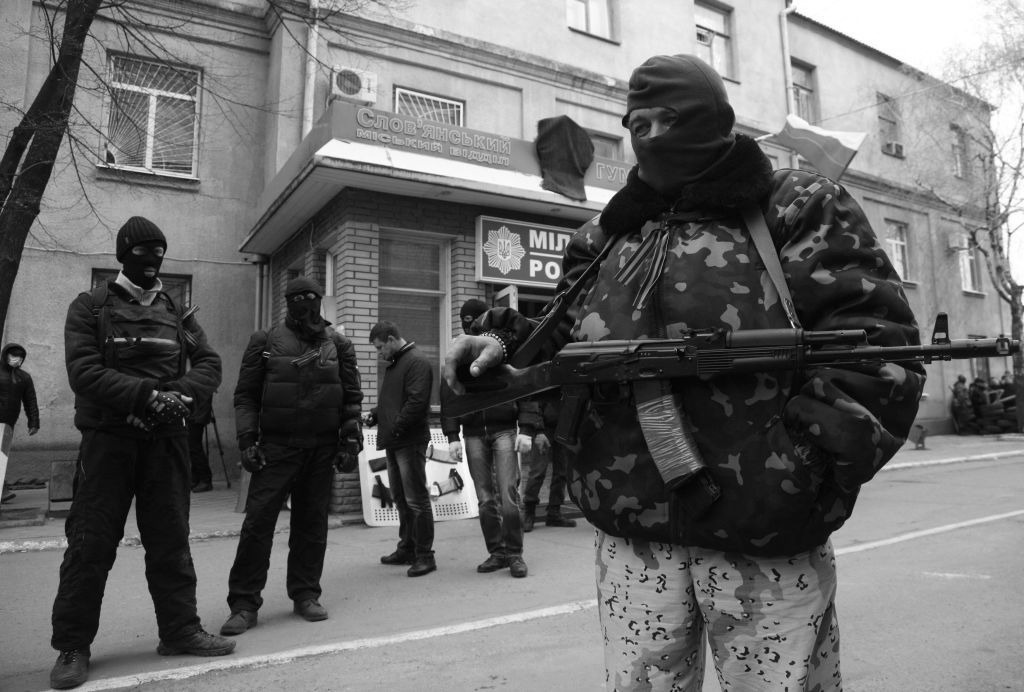
Anatoly Stepanov/AFP via Getty Images
So, when does the rules of war start to apply?
Surprisingly, there is no definite answer. The reason is that there is no central authority that identify and classify the level of armed violence. Therefore, it is always determined on a case-by-case basis based on cumulative evidence relating to objective criteria.
When determining the threshold of violence the objective criteria includes:
- Intensity of the Violence, which should reach a sustained and collective level. This isn’t about isolated incidents or sporadic acts. It implies fighting that is protracted, involves military-style operations (even if small scale), and might require the government to use its armed forces (not just police) to confront it. Factors considered include: the number, duration, and intensity of individual confrontations; the type of weapons used (military-grade vs. typically civilian/police); the number of people involved in fighting; the casualties; and the scale of material destruction.
- Organization of the Parties (especially for non-state groups). The non-governmental armed group (e.g., rebels, insurgents) must possess a certain degree of organization. This means they are not just an angry mob. They should have a command structure, disciplinary rules, the ability to plan and carry out military operations (like coordinated attacks, troop movements), access to weapons, and potentially even some territorial control. This level of organization allows them to act as a “party to the conflict” capable of both abiding by and violating IHL.
If the situation escalates beyond mere protests to a level where a state’s armed forces are engaged in protracted armed violence against organized armed groups (like an insurgency or a civil war), then IHL “switches on.” Here, soldiers are combatants, not law enforcement. While still bound by rules, they are permitted to use lethal force against enemy combatants and military objectives. The focus shifts from individual law enforcement to regulating the conduct of hostilities between parties to a conflict, where the four Geneva Conventions and their two Additional Protocols provide the core legal framework.
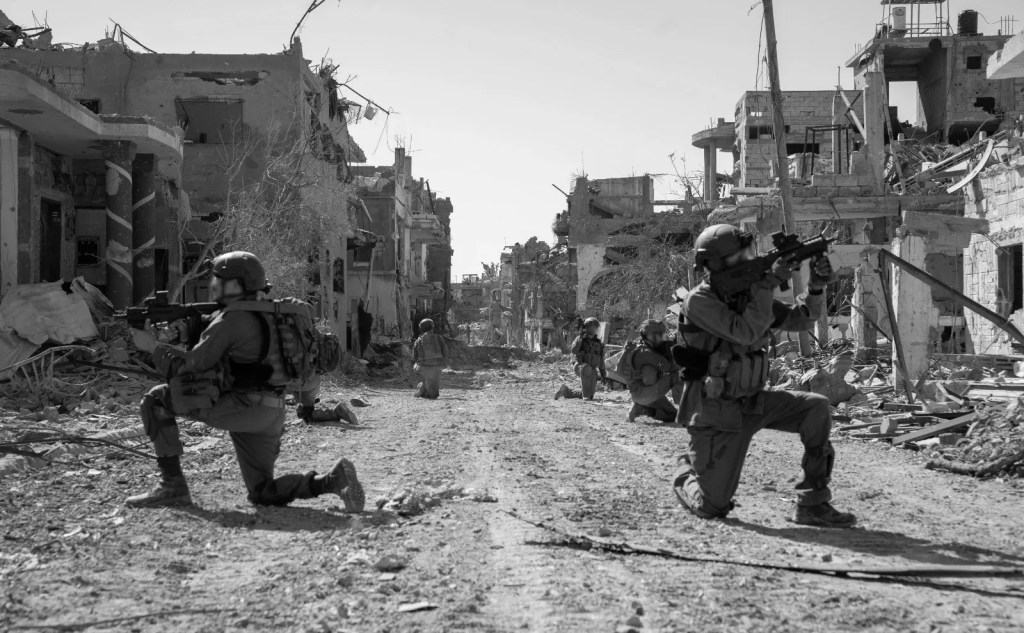
IDF handout via EYEPRESS via Reuters
International Armed Conflict
A critical aspect of an international armed conflict (IAC) applicability is its remarkably low threshold. There is no minimum requirement for the intensity or duration of the confrontation for it to be considered an IAC.
So, when does IHL “switch on” for an IAC?
The answer might surprise with its simplicity: almost immediately. Under contemporary IHL, even an exchange of “two shots” across a border or the unconsented deployment of troops in another state’s territory, even without resistance (an occupation), is enough to trigger the full force of the law.
Consider the reality: a single bullet fired by a soldier across a disputed border, or a cyberattack by one state that causes a power grid to collapse in another, can instantly activate IHL. Think of the frequent, tense standoffs along the Line of Control between India and Pakistan, or the sporadic, deadly exchanges near the Korean Demilitarized Zone, like the Yeonpyeong Island shelling in 2010. These aren’t always full-blown wars, but they are undeniably instances of armed force between states. In such moments, IHL’s rules on targeting, protection of civilians, and treatment of combatants immediately apply, even if the broader political situation doesn’t escalate into a sustained conflict. This immediate application ensures that humanitarian principles are paramount from the very first spark of inter-state violence, regardless of its scale or duration.
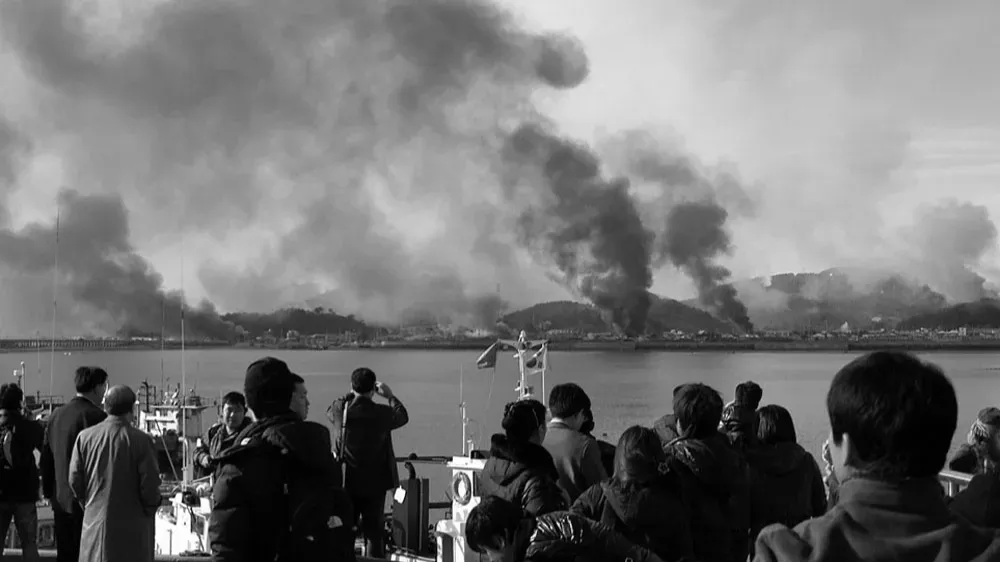
The 2010 shelling of Yeonpyeong Island between North and South Korea, while a grave act of armed force, did not lead to a broader conflict. In these instances, IHL applies, but its presence is transient, a legal flashpoint rather than a prolonged state of being. AFP/Getty Images
When the Dial Doesn’t Turn: Incidents Below the Threshold
Despite IHL’s remarkably low threshold for international armed conflict, it’s crucial to remember that not every incident involving state actors or borders automatically triggers its application.
Imagine a scenario where an army patrol, perhaps disoriented during a training exercise, accidentally crosses into a neighboring country’s territory but immediately withdraws without any exchange of fire. In such a case, while a border violation has occurred, there has been no “resort to armed force” between states, and thus IHL would not apply.
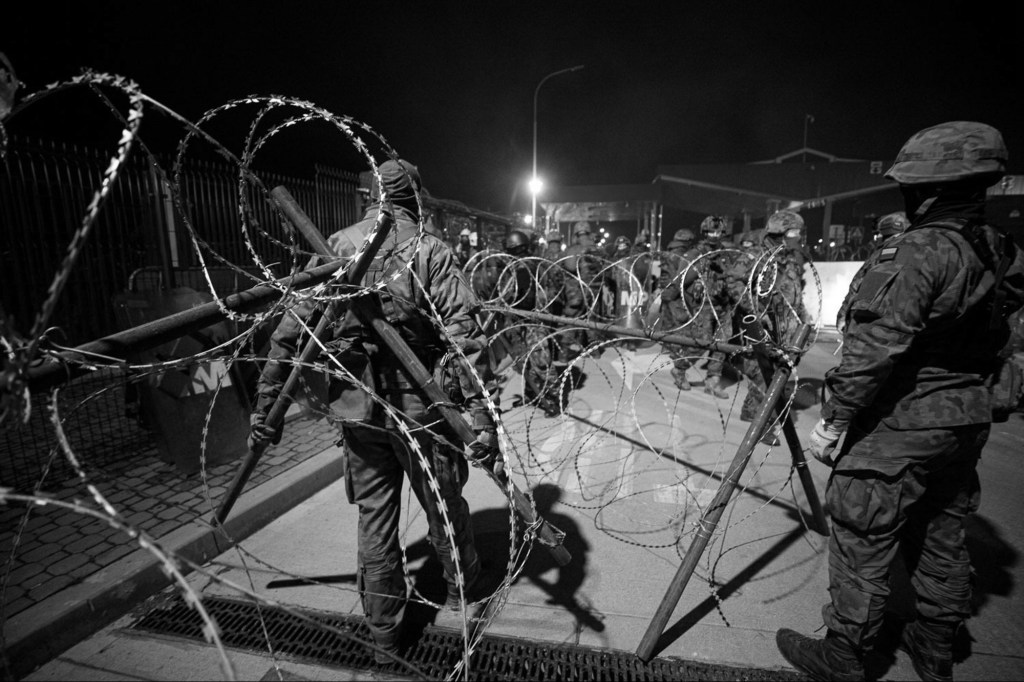
The Situation on the Poland-Belarus Border, 2021 /FLICKR
Similarly, consider an isolated, unauthorized act by an individual soldier – perhaps a drunk border guard firing a weapon across a frontier, hitting an officer on the other side. While a tragic and criminal act, if this remains an isolated incident, not sanctioned by the state, and does not lead to a broader military response or exchange of fire, it would likely be treated as a matter of domestic criminal law and international human rights law, rather than triggering an international armed conflict under IHL.
This highlights the nuanced, factual assessment required: IHL “switches on” when states, through their armed forces, fully engage in a military operation. It doesn’t apply to every single hostile act, even very serious ones, if those acts aren’t part of an armed conflict. It’s a vital distinction that underscores the complexity of applying these laws in a world of constant tension.
The Importance of Understanding When IHL Starts to Apply
Uncertainty regarding when IHL applies leaves individuals in vulnerable positions. If a situation’s status as an armed conflict is unclear, the protected status of individuals (e.g., civilian, prisoner of war) and the corresponding obligations of parties to the conflict become ambiguous.
This lack of clarity can directly lead to suffering and death that might have been avoided had IHL been better respected and its applicability clearly understood.
For example, if a situation is deemed merely an internal disturbance rather than a non-international armed conflict, individuals may be denied protections against arbitrary detention, inhumane treatment, or targeting, as the full scope of IHL would not apply.
This creates significant deficits in humanitarian protection, leaving populations exposed to violence without the legal safeguards designed to limit its effects.

Nuremberg Trials, 1945-46 (HD-SN-99-02955 – DOD/NARA)
The “threshold of violence” is intrinsically linked to the prosecution of war crimes. For an act to constitute a war crime, it must generally have been committed in the context of an armed conflict. If a situation is not definitively deemed an armed conflict, then IHL, and consequently the framework for war crimes, may not apply. This directly impacts the ability to establish individual criminal responsibility.
The Nuremberg trials, for instance, established the precedent of holding individuals, rather than solely states, responsible for breaches of international law, including the crime of waging aggressive war. This foundational shift makes the precise determination of IHL’s applicability paramount for establishing criminal jurisdiction.
Conclusion: A Legal Compass in a Violent World
In conclusion, the question “Is This War?” is, in a legal sense, largely irrelevant. International Humanitarian Law does not hinge on formal declarations of war.
Instead, its applicability is determined by the objective, factual assessment of whether a “threshold of violence” has been met.
The “threshold of violence” is not a static legal concept but a dynamic interpretive challenge that demands continuous engagement.
The ultimate effectiveness of IHL, particularly concerning its thresholds, requires an adaptive governance approach; it depends on the unwavering commitment of states and non-state actors to respect and enforce its provisions.
This involves ongoing dialogue among legal scholars, practitioners, and policymakers to foster a shared understanding that balances legal precision with operational realities, always prioritizing the protective mandate of IHL amidst the “accumulated evil” of armed conflict.

Regional reports on the implementation of international humanitarian law. 26-03-2025 / ICRC
 IHLBriefs - Rules of War Explained